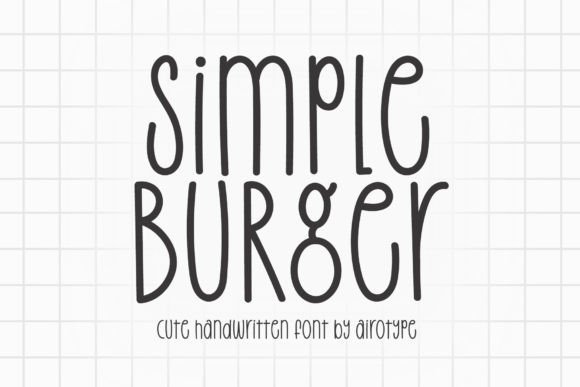
Simple Burger: A Handwritten Font for Authentic Connections
You've spent hours on the perfect logo concept, the ideal product photo, or the most engaging social media caption. But something feels off. The message is right, the visuals are strong, yet it all lacks that final spark of personality—the human touch that makes a brand feel approachable and real. This is where typography steps in, and not just any typography. A typeface like Simple Burger, a sweet and friendly handwritten font, can be the secret ingredient that transforms a good design into one that genuinely connects with people.
The Irresistible Charm of Handwritten Style
At its core, Simple Burger is a handwritten font designed to feel natural and unique. It avoids the overly polished, sometimes sterile look of many digital typefaces. Instead, it embraces the subtle imperfections and fluid lines of real handwriting. This isn't about mimicking messy scrawl; it's about capturing the warmth and authenticity that comes from something crafted by hand. Its style is incredibly versatile, fitting seamlessly into a large pool of designs. Think of it as the typographic equivalent of a friendly wave or a handwritten note on a gift tag—it immediately sets a different, more personal tone.
This quality makes it a powerful creative font for anyone looking to break through the digital noise. In a landscape saturated with sleek, impersonal graphics, a touch of humanity can make all the difference. Whether you're a small business owner crafting your first brand identity or a content creator developing a recognizable style for your Instagram feed, the font you choose is a direct reflection of your brand's voice.
From Coffee Shop Menus to Digital Storefronts
So, where does a font like Simple Burger truly shine? Its applications are limited only by your imagination, but let's explore some practical, real-world scenarios where its personality adds tangible value.
For branding and logo design, it’s a standout choice for businesses that want to project friendliness and approachability. Imagine a local bakery, a boutique plant shop, a freelance photographer, or a children’s clothing line. Simple Burger in a logo instantly tells customers, "We're here to help, and we’re easy to talk to." It works beautifully for brand names, taglines, or even as a secondary font for accents on business cards and letterheads, reinforcing a cohesive brand identity.
Move into packaging design, and the font’s charm becomes tactile. On a jar of homemade jam, a box of artisan chocolates, or a soap label, Simple Burger mimics the look of a personal, handcrafted product. It communicates care and quality in a way that a standard sans serif might not. Similarly, for print materials like event posters for a community fair, flyers for a yoga studio, or thank-you cards for customers, it adds a layer of warmth and invitation.
The digital realm is equally fertile ground. As a web design asset, it can be used sparingly but effectively—think hero section headlines, pull quotes on a blog, or calls-to-action that need to feel more conversational. For social media graphics, it’s a game-changer. Instagram stories, quote cards, and promotional announcements become more engaging and shareable when they feel personal. A marketing professional could use it to create email headers or newsletter graphics that stand out in a crowded inbox, fostering better audience engagement.
Practical Guidance for Pairing and Use
While Simple Burger is versatile, using a handwritten font effectively requires a bit of strategy. Its strength is in its personality, so it's often best used as a display or accent font rather than for long blocks of body text. Here’s how to integrate it thoughtfully:
- Choose the Right Moment: Use it for headlines, subheadings, logos, or short phrases where you want to inject personality. For body copy, pair it with a clean, highly readable serif font or sans serif font. A classic combination might be Simple Burger for a headline with a font like Open Sans or Lora for paragraph text. This creates a beautiful contrast and ensures readability.
- Test Your Pairings: Always test your font combinations in context. How does the headline look next to the body text on your website mockup? Does it work at different sizes? Does the handwritten style clash with or complement your imagery? A quick mockup can save hours of revision later.
- Consider the Context: Think about your project's goal. For a formal corporate report, Simple Burger might not be the right fit. But for a creative portfolio, a wedding invitation suite, or a menu for a cozy café, it’s perfect. Match the font's personality to the emotional tone of your project.
- Explore the Included Styles: Many premium fonts come with stylistic alternates, ligatures, or multiple weights. Check if Simple Burger offers different versions—a slightly bolder weight for emphasis or alternate characters that can add flair to specific letters. These extras expand your creative toolkit significantly.
- Understand the License: If you're using the font for commercial projects—like client work, merchandise you sell, or a business website—ensure you have the proper commercial licensing. This is a critical step for any design asset to avoid legal issues down the line.
Elevating Your Project with Intentional Typography
Ultimately, typography is a tool for visual communication. The right typeface does more than just display words; it conveys emotion, establishes hierarchy, and guides the viewer's eye. Simple Burger, as a handwritten font, excels at conveying warmth, approachability, and creativity. It can improve visual consistency across your marketing assets, from social posts to printed flyers, strengthening brand recognition. When used wisely, it enhances professional presentation by showing attention to detail in every element of your design.
Think of your font choice as casting an actor for a role. You wouldn't cast a dramatic lead in a lighthearted comedy without considering the fit. Simple Burger is your friendly, charismatic lead for projects that need a human touch. It’s a creative font in your toolkit, ready to help you tell a more compelling story, one beautifully crafted word at a time. The only limit, truly, is your imagination and the willingness to experiment until the design feels just right.