Whatever: A Handwritten Font That Brings Instant Personality
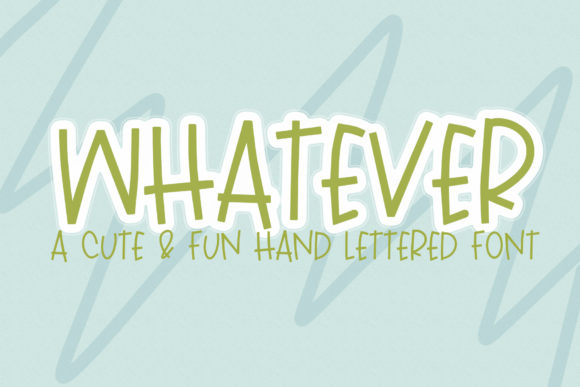
There’s a certain magic in a font that feels like it was just written by a friendly hand. You know the type—it’s the one that makes a coffee shop menu feel cozy, a child’s birthday invite feel joyful, or a small business logo feel genuinely approachable. That’s the space Whatever lives in. This is a cute and fun handwritten font. Quirky, readable and childish, this font will make each of your designs look approachable. It’s not trying to be the loudest or most complex typeface in the room; its strength lies in its effortless charm and versatility. If you’ve ever struggled to find a font that balances personality with readability, Whatever might just be the answer you’ve been looking for.
Why a Handwritten Style Resonates So Well
In a world saturated with sleek, geometric sans serifs and authoritative serifs, a handwritten font like Whatever offers a breath of fresh air. It taps into a desire for authenticity and human connection. The slightly irregular lines and playful letterforms mimic the imperfections of real handwriting, which can instantly soften a brand’s image and make it feel more relatable. This isn’t about achieving corporate precision; it’s about creating warmth. For a small business owner, using this creative font on a thank-you note or product tag can make a customer feel valued. For a content creator, it can transform a standard social media graphic into something that feels personal and inviting. It’s a powerful tool for visual consistency when your brand’s voice is meant to be friendly, casual, and approachable.
Choosing the right font style is about matching personality to purpose. Whatever is inherently playful and youthful, making it an excellent choice for projects targeting families, children, or anyone with a young-at-heart spirit. Think of a bakery’s logo, a boutique’s packaging, or the header of a parenting blog. The font’s readability is key here—it’s quirky enough to be interesting but clear enough that your message isn’t lost. This balance is crucial for professional presentation. You want your audience to smile at the style, not struggle to decipher the words.
Putting Whatever to Work Across Your Projects
The true test of any premium font is its practical application. Where does a typeface like this shine? Let’s break down some real-world scenarios where its personality can elevate your work.
For Branding and Logo Design: Your brand identity is your first impression. A logo set in Whatever immediately communicates fun, creativity, and approachability. It’s perfect for a children’s clothing line, a DIY craft studio, a specialty ice cream shop, or a creative agency that wants to appear less rigid. The key is to ensure the font’s playful nature aligns with your core brand values. Pair it with a simple, clean sans serif font for body text to maintain readability in longer descriptions while letting the logo headline capture all the personality.
For Packaging and Merchandise: Imagine a kraft paper coffee bag with “Freshly Roasted” written in Whatever’s friendly scrawl. Or a tote bag with a witty phrase that feels like it was written just for you. This display font excels in packaging design and on merchandise because it creates an instant emotional hook. It turns a product into a story. When designing, consider the texture of the material—Whatever’s hand-drawn look pairs beautifully with natural, textured substrates like recycled paper or cotton.
For Digital and Social Media: In the fast-scrolling world of Instagram or Pinterest, a handwritten font can be a scroll-stopper. Use it for bold headlines on your social media graphics, for quotes, or for call-to-action buttons on your website. It adds a layer of human touch to digital spaces that can often feel sterile. For a web design project, you might use it for a hero section headline or for special promotional banners, always ensuring it’s used in large enough sizes where its details are clear. Remember, a font that’s charming in a headline can become illegible in a paragraph.
Mastering the Pair: Making Whatever Work with Other Typefaces
No font is an island. The real artistry in modern typography lies in creating harmonious font pairings. Whatever, with its strong personality, needs a partner that can provide balance and structure. The general rule of thumb is to contrast style, not compete for attention.
- With a Sans Serif: This is often the safest and most effective pairing. Combine Whatever with a clean, geometric sans serif font like Open Sans, Lato, or Montserrat. Use Whatever for headlines and the sans serif for body copy. This maintains a high level of readability while letting the handwritten font deliver all the character.
- With a Serif: For a more eclectic, perhaps slightly vintage or editorial feel, pair it with a classic, readable serif font. Something like Georgia or Lora can provide a nice contrast. This works well for editorial design in magazines or blog layouts where you want a mix of friendly and authoritative.
- Avoid Pairing with Another Script: Pairing two highly stylized script or handwritten fonts is a recipe for visual chaos. It’s typically best to let Whatever be the sole star of the show in the display role.
Always test your font pairings in context. Create a mockup of your marketing assets—a social post, a business card, a website header—and step back. Does the hierarchy feel clear? Is the main message easy to read at a glance? The goal is a cohesive system where each typeface has a distinct job.
Practical Considerations Before You Dive In
Before integrating any new design asset into your workflow, a few practical checks can save headaches down the line.
First, review the included font styles. A quality font family often comes with more than one weight. Check if Whatever includes a regular, bold, or italic version. A bold weight can be fantastic for adding emphasis in headlines without switching fonts, helping maintain visual consistency.
Second, understand the commercial licensing. If you’re using this font for a client project, a product you sell, or any commercial venture, you must ensure your license covers that use. Most commercial fonts have clear licensing terms—don’t assume a free personal use license extends to commercial work. This is a critical step in professional presentation and legal compliance.
Finally, consider your audience and medium. While Whatever is incredibly versatile, it might not be the right fit for a formal law firm’s website or a highly technical whitepaper. Its strength is in contexts where warmth and approachability are assets. For digital products like e-books or printable planners, it can make the content feel more accessible and less intimidating. For print materials like posters or invitations, it adds a handmade, bespoke quality.
Ultimately, a font like Whatever is a tool for connection. It’s a creative font that doesn’t take itself too seriously, allowing your message to come through with a smile. By thoughtfully applying it—considering its personality, pairing it wisely, and using it in the right contexts—you can significantly boost audience engagement and make your designs feel genuinely human. It’s not just about looking good; it’s about feeling right.