Machine: The Typeface Where Gears Meet the Future
Imagine a world where the industrial revolution never ended, where steam-powered computers hum in brass casings and airships are commonplace. This is the aesthetic realm of steampunk, and it’s a world that demands a specific visual language. At the heart of that language is typography. A generic sans-serif font simply won’t do; you need a typeface that looks like it was forged in a workshop, not generated by a software algorithm. This is where the Machine premium font steps in, offering a bridge between Victorian craftsmanship and a high-tech, alternate-history future.
For designers, entrepreneurs, and creators looking to inject a heavy dose of industrial character into their work, this typeface is more than just letters on a screen. It is a design asset that functions as a texture, a logo element, and a storytelling device all at once. Let’s explore how this unique display font can transform your creative projects from mundane to mechanical.
The Anatomy of Industrial Design
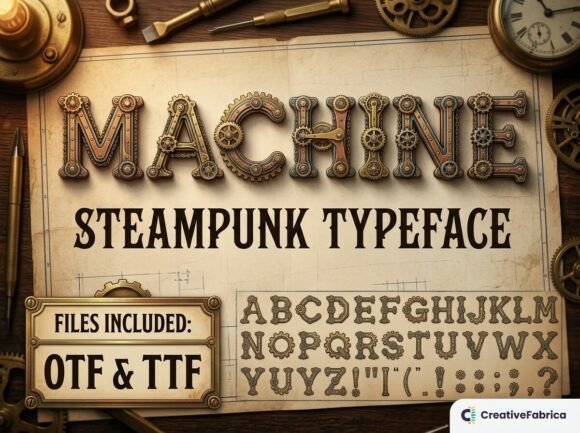
What sets Machine apart from standard decorative fonts is its commitment to realism. In modern typography, we often look for clean lines and scalability, but for niche projects like logo design or packaging design for a themed product, texture is king. This typeface has been painstakingly constructed to mimic the look of heavy machinery. The letterforms aren't just shaped like gears; they possess a three-dimensional quality that suggests weight and metal.
The visual appeal lies in the details: the realistic rivets holding the letters together, the metallic sheen of iron plates, and the intricate interplay of cogs. When you use this font, you aren't just typing words; you are assembling a mechanism. This makes it an ideal choice for:
- Sci-fi novel covers: Instantly communicating the genre to a browser in a bookstore.
- Gaming interfaces: Creating a HUD (Heads-Up Display) that feels tactile and immersive.
- Cinematic titles: Setting the scene for an alternate-history epic before the first frame even plays.
The depth and shadow work within the font give it a presence that flat, sans serif fonts cannot match. It commands attention without shouting, relying on its intricate structure to draw the eye.
Practical Applications for Modern Creators
While the steampunk aesthetic is specific, its applications in the real world are surprisingly broad, especially as consumers crave more unique, niche branding. If you are a small business owner or a content creator, here is how you can practically apply this premium font to your workflow.
Branding and Identity
If your brand identity revolves around craftsmanship, engineering, vintage goods, or even a quirky, retro-futuristic vibe, Machine can serve as a cornerstone of your visual identity. It works exceptionally well for:
- Craft Breweries and Distilleries: Think of the labels on a bottle of artisan gin or a heavy stout. The mechanical texture suggests a careful, hands-on distillation process.
- Escape Rooms and Themed Venues: For marketing assets, invitations, and signage, this font creates an immediate sense of immersion.
- Workshops and Maker Spaces: It signals that your business is about building, fixing, and creating.
Digital Presence and Editorial Design
On the web, readability is usually the priority, which is why we pair display fonts with standard body text. However, for headers, hero sections, and pull quotes, Machine provides a powerful punch. In editorial design, such as a magazine feature on the history of the steam engine or a blog post about DIY robotics, using this typeface for headlines adds a layer of thematic consistency that stock photos alone cannot achieve.
For social media graphics, where the scroll speed is rapid, you need something that stops the thumb. The metallic, 3D texture of this font is highly visual. It works beautifully for:
- Podcast cover art for history, tech, or fiction genres.
- YouTube thumbnails for video essays on engineering or retro-gaming.
- Event posters for local markets, cosplay conventions, or theater productions.
Strategic Font Pairing and Readability
One of the most common mistakes in web design and graphic design is using a decorative font for everything. Because Machine is a high-detail display font, it is not designed for long-form body text. Reading a paragraph of intricate gear-textured letters would be exhausting for the human eye. Instead, its strength lies in contrast.
To maintain a professional presentation and ensure readability, you must pair this typeface with something clean and simple. Here are a few practical pairings:
- Machine + Roboto/Montserrat: A geometric sans-serif provides a modern, neutral background that lets the intricate details of the header font shine.
- Machine + Courier/Old Typewriter Fonts: If you want to lean fully into the vintage vibe, a monospaced typewriter font for body text complements the industrial aesthetic without competing for attention.
- Machine + Serif Fonts (like Lora): For a more editorial, high-fantasy RPG feel, a classic serif font offers elegance that balances the grit of the machine.
When designing marketing assets, always test your pairings on both mobile and desktop. The fine details of the gears and rivets in Machine may become muddy if the font size is too small. It is best used at larger scales—think headers, sub-headers, and logos—where the craftsmanship can be fully appreciated.
Making the Investment: Licensing and Quality
When selecting a creative font for commercial use, the quality of the file and the license agreement are just as important as the visual style. Free fonts found on random repositories often come with hidden costs: missing characters, poor kerning (spacing between letters), or licensing restrictions that prohibit use on merchandise.
Investing in a commercial font like Machine ensures you have the rights to use the design across all your platforms—from your website to printed merchandise. It also typically guarantees that the vector paths are clean, which is crucial if you need to scale the font up for a massive banner or modify it for a complex logo design.
Before finalizing your project, review the included font styles. Does the typeface include numbers and punctuation? Does it have multiple weights or styles that allow for hierarchy? A well-rounded font package provides the flexibility needed to handle diverse design assets, ensuring your brand remains consistent whether you are printing flyers for a local event or designing the interface for a mobile app.
Conclusion: Forging Your Visual Narrative
Typography is the voice of your design. While a handwritten font whispers intimacy and a script font shouts elegance, the Machine typeface speaks of power, ingenuity, and timelessness. It bridges the gap between the past and the future, making it a versatile tool for anyone looking to add depth and character to their visual communication. By using this font strategically—in headers, logos, and key graphics—you can build a world for your audience that feels tangible, immersive, and undeniably cool.