Hand Drawn: The Playful Typeface for Authentic Branding
There’s a certain magic in a design that feels human. In a world saturated with polished, geometric sans-serifs and flawless digital vectors, a touch of imperfection can be the very thing that makes a brand memorable. Enter the world of hand-drawn typography, where fonts like Hand Drawn offer a scribbled, organic quality that instantly communicates warmth, creativity, and approachability. This isn't just a font; it's a visual voice that can transform a project from sterile to spirited.
More Than Just a Scribble: The Visual Appeal
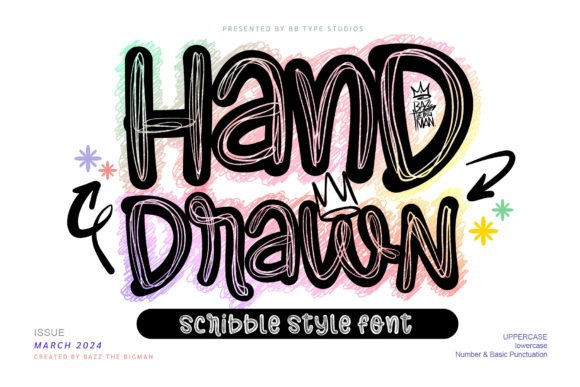
At first glance, a font like Hand Drawn might seem casual, but its design is intentional. The slightly uneven baselines, the varied stroke weights, and the playful irregularities mimic the natural movement of a pen or marker on paper. This gives it a distinct personality that more structured typefaces lack. It’s a premium font that functions as a powerful display font, designed to catch the eye and set a tone rather than serve as body text. Its charm lies in its ability to evoke nostalgia, whimsy, and authenticity—qualities that resonate deeply in both personal and commercial design.
Where Playful Typography Truly Shines
The true strength of a handwritten font like this lies in its versatility across creative applications. It’s not limited to one niche; it’s a tool for adding character to a wide array of projects.
For brand identity, particularly for businesses targeting families, creatives, or those with a DIY ethos, this typeface can become a cornerstone. Imagine a local bakery’s logo, a children’s bookshop’s signage, or a craft workshop’s branding—Hand Drawn infuses each with a friendly, handmade feel. In logo design, it can create an immediate emotional connection, suggesting that there’s a real person or story behind the business.
In packaging design, it helps products stand out on a crowded shelf. A gourmet jam jar label, a artisanal coffee bag, or a toy box featuring this font tells a story of care and creativity before the product is even opened. For social media graphics, it cuts through the digital noise, making posts for promotions, announcements, or quotes feel more personal and engaging. Its use on websites and blogs is best reserved for headlines, pull quotes, or call-to-action buttons where a burst of personality is needed, rather than for lengthy paragraphs where readability is paramount.
Think about print materials like event posters for a community fair, whimsical invitations for a child’s birthday party, or eye-catching flyers for a garage sale. The font’s energy makes the information feel exciting. It’s also perfect for merchandise—think t-shirts, tote bags, and mugs—where a catchy phrase rendered in a creative font becomes wearable or usable art. Even in editorial design, it can be used for chapter titles or section headers in magazines or digital products like e-books and planners, adding a touch of informality and flow.
Practical Wisdom for Using a Hand-Drawn Typeface
Choosing a font like Hand Drawn is just the first step. Using it effectively requires a thoughtful approach to ensure it enhances, rather than hinders, your project’s goals.
Match the Font to the Project’s Soul. Before selecting any typeface, ask: What is the core message? A playful, hand-drawn style is fantastic for a children’s brand, a casual event, or a product emphasizing organic, handmade qualities. It would be less suitable, however, for a law firm’s annual report or a luxury tech brand’s minimalist aesthetic. Understanding the project’s personality is key.
Prioritize Readability, Especially at Scale. This is crucial. While beautiful as a headline, a scribbled font can become difficult to read in small sizes or in long blocks of text. Always test your designs. Print a sample of your packaging design at actual size. View your social media graphic on a phone screen. Ensure the main message is clear and legible. Often, pairing it with a clean, neutral sans serif font for body text creates a perfect balance, giving you the best of both worlds: personality and clarity.
Explore the Full Font Family. A well-designed commercial font like Hand Drawn often comes with more than just the basic uppercase and lowercase letters. Check for included styles: Are there alternate characters? Ligatures? Swashes? Does it include a full set of numerals and punctuation? Utilizing these extras can add sophisticated variety to your designs, making your work feel more custom and less templated.
Consider the Commercial License. If you’re a small business owner, entrepreneur, or designer using this font for client work, commercial licensing is non-negotiable. Ensure you understand the terms of the license you purchase. Does it cover the intended use—web, print, merchandise? Is it a one-time fee or a subscription? Respecting font licensing is a mark of a professional and protects you legally.
Crafting a Cohesive Visual Language
When used strategically, a font like Hand Drawn becomes more than a decorative element; it becomes a pillar of your visual consistency. By applying it consistently across your marketing assets—from your website headers to your email newsletter graphics to your product tags—you build a recognizable brand recognition system. Customers begin to associate that specific, friendly scribble with your brand’s promise.
The goal of modern typography is communication, and sometimes the most effective communication is emotional. A handwritten font bypasses the formal, corporate tone and speaks directly to a sense of fun, authenticity, and human touch. It’s a design asset that doesn’t just display words; it conveys a feeling. Whether you’re crafting a brand from scratch or refreshing an existing one, considering how a font like Hand Drawn might inject the right dose of personality could be the step that makes your next project truly connect.