Happy Cow: The Font That Brings a Smile to Your Brand
There’s a specific kind of energy that jumps off the screen when you see typography that doesn’t take itself too seriously. It’s the difference between a corporate memo and a birthday invitation, between a sterile instruction manual and a vibrant cereal box. If you’ve been hunting for that perfect typeface to inject personality into a project—something that feels like a high-five in font form—you’ve likely scrolled past endless options that feel either too rigid or too messy. Enter a design asset that balances whimsy with structure: Happy Cow. This display typeface is more than just a collection of chunky letters; it is a statement piece that embodies playfulness and authenticity, making it a secret weapon for designers and entrepreneurs alike.
The Anatomy of Fun: Why This Display Font Works
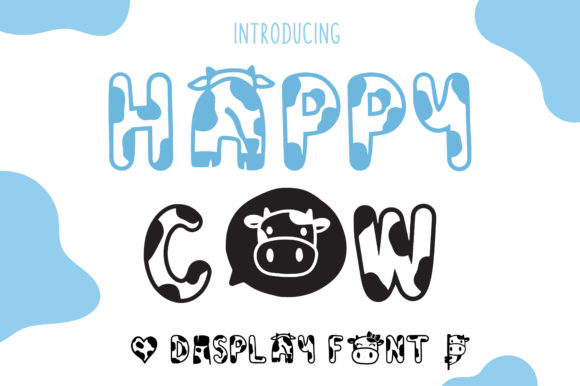
At its core, Happy Cow is a premium font designed to command attention without shouting. As a display font, its primary job is to be the hero of your headlines, logos, and short bursts of text. It features a chunky, rounded aesthetic that feels tactile and friendly. Unlike a standard serif font which conveys tradition and authority, or a clean sans serif font that suggests modern minimalism, this typeface sits in a unique category. It borrows the approachability of a handwritten font but maintains the consistency and legibility of professional modern typography.
The visual appeal lies in its weight. The letterforms are bold and substantial, which gives them a grounding effect. They feel stable, yet the curves and terminals are soft enough to remain inviting. This creates an immediate psychological connection with the viewer. It signals safety, fun, and approachability. For a brand identity, this is gold. It tells your audience, "We are here to help, and we’re going to have a good time doing it." It’s the visual equivalent of a mascot that you actually want to hang out with.
From Screen to Shelf: Practical Applications for Creative Projects
You might be wondering how a font with such a distinct personality fits into a professional workflow. The answer lies in versatility. While you wouldn't use Happy Cow for the body text of a legal contract (please don't), it shines in almost every other creative application where engagement is key.
Consider packaging design. If you are launching a line of organic snacks, craft supplies, or children’s toys, the shelf presence is everything. A chunky lettered font like Happy Cow instantly communicates the product's vibe before the customer even reads the description. It cuts through the noise of a crowded aisle because it feels different from the standard corporate typefaces used by big-box retailers.
The same logic applies to logo design. A logo needs to be memorable. Using a typeface that embodies playfulness helps small businesses stand out. Imagine a local bakery, a pet grooming service, or a weekend art workshop. Using this font in the logo sets a tone of friendliness that invites customers in. It’s particularly effective for merchandise—think t-shirts, tote bags, or stickers—where the text needs to be readable from a distance but carry a specific emotional weight.
Digital Presence: Websites, Blogs, and Social Media Graphics
In the digital realm, attention spans are short. Web design relies heavily on visual hierarchy to guide the user's eye. Happy Cow is an excellent choice for H1 headers, call-to-action buttons, or announcement banners on a homepage. It breaks the monotony of standard web-safe fonts and adds a layer of personality that makes a site feel custom-built and curated.
For social media graphics, the stakes are even higher. You are competing with endless scrolling. A bold, fun display font stops the thumb. It is perfect for quote cards, sale announcements, or podcast cover art. If you are a content creator or a blogger, using this font consistently across your Pinterest pins and Instagram stories helps build a recognizable visual brand. Your followers will start to recognize your "voice" visually before they even read the caption.
Don't overlook digital products either. If you are selling PDF planners, educational worksheets, or printable art, the font choice defines the user experience. For children activity sheets or school projects, a font like Happy Cow is essential. It is legible for developing readers but engaging enough to keep them interested. It turns a mundane worksheet into a fun challenge.
Strategic Pairing and Professional Polish
One of the common pitfalls in editorial design is using a display font for everything. To maintain readability and professional presentation, you need to master the art of font pairing. Because Happy Cow is a creative font with a lot of character, it needs a grounding partner.
For editorial layouts or marketing assets, try pairing this display typeface with a clean, geometric sans serif for your body text. The contrast allows the headlines to pop while ensuring the main message remains easy to scan. For example, the chunky, rounded nature of Happy Cow pairs beautifully with a light-weight sans serif like Montserrat or Open Sans. This creates a balance between "fun" and "functional."
When testing your pairings, pay attention to the x-height and spacing. A display font often has more personality in its spacing than a body font, so you may need to adjust your kerning slightly to ensure the headline sits comfortably next to the body copy. Always print out a test page or view it on a mobile device; modern typography must be responsive, looking just as good on a billboard as it does on a smartphone screen.
Smart Selection: Licensing and Long-Term Value
Choosing a commercial font is an investment in your brand’s visual infrastructure. When you decide to add a typeface like Happy Cow to your toolkit, you aren't just buying letters; you are buying a mood. However, it is crucial to review the licensing terms carefully. Ensure the license covers your specific intended use, whether that is for physical products, digital ads, or software embedding.
Look for a font family that offers multiple weights or styles if possible. While a single weight is great for logos, having a "Bold" or "Italic" variation can extend the life of the font across different design assets. Check the character map as well—does it support multiple languages? Does it include the special symbols you might need for pricing or punctuation?
Ultimately, the goal of brand recognition is consistency. By selecting a high-quality, authentic typeface like Happy Cow and using it strategically across your touchpoints—from your website headers to your packaging—you create a cohesive world for your customers. It’s a subtle detail, but it’s one that makes your designs come alive, proving that sometimes, the right font really does make all the difference.